


Production Processes
Plastic Injection
Sa-ba injection line features 26 units of injection machines
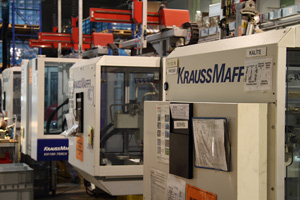 ranging from 6 to 420 tons.
ranging from 6 to 420 tons.All the injection machines are selected based on the customers' quality and efficiency expectations and operated as debugged with state-of-the-art production techniques and machine process control modules, from automated raw material preparations to provision of finished and semi finished goods in line with customer's expectations.
OEE (Overall Equipment Effectiveness) data are traced on a daily basis by an experienced team and effectiveness and efficiency of our processes are maintained by Sa-ba's maintenance workshop. Predictive and periodic machine maintenances, productivity and quality gains with robot application, daily 5S and TPM inspections ensure both internal continuous development and systematically sharing its benefits with the customers.
Metallization
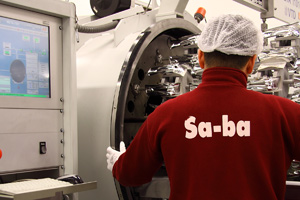
Sa-ba’s metallization process is able to satisfy even the heaviest OEM expectations.
The periodical and predictive maintenance of process, as well as periodical cleaning and overall equipment effectiveness data are under precision tracking.
Assembly and welding processes
Sa-ba's assembly lines are designed according to automotive industry interior and exterior lighting systems and are continuously developed through advanced Poke-Yoke systems, daily OEE analyses, 5S inspections and kanban applications so as to meet the quality and productivity expectations of OEM companies.
Sa-ba incorporates six units of ultrasonic welding machines and three units of vibration welding machines.
Vibration machines are loaded and unloaded by means of 6-axis robots.
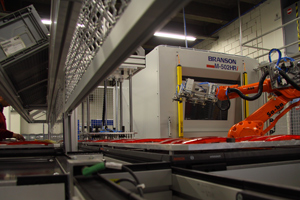
For debugging vibration welding processes, sub-plastic parts' dimensional stabilities are continuously checked by a SPC system, while computerized vibration welding processes and pre-centering application for molds are applied to all OEM projects.
Each part produced through the debugging system is equipped with PLC and poke yoke systems and subjected to 100% impermeability tests, against all potential risks that may occur during normalization, tempering and handling works carried out after vibration welding.
Daily overall equipment effectiveness tracking and robotic machine loading stages are model applications in terms of efficiency benefits shared with the customer.
